Paying for Gigabit? 5 Reasons Your Home Wi-Fi Still Feels Slow (And How to Fix It)
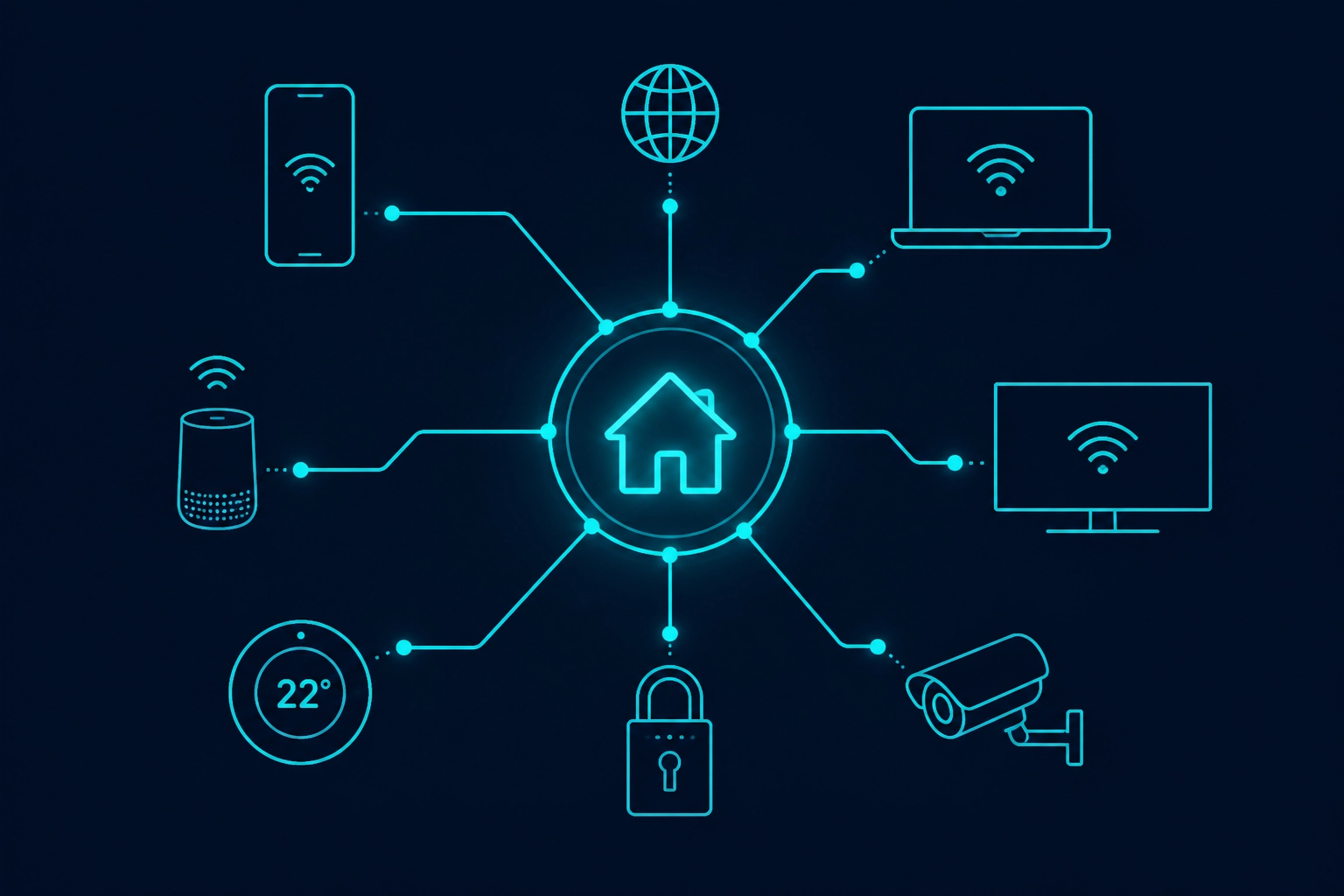
You just signed the contract. You’ve upgraded to "Gigabit" fibre. The marketing promised lightning-fast downloads, seamless Zoom calls, and enough bandwidth to run a small country from your spare bedroom in Marlow.
Then you sit down on the sofa, open your laptop, and… nothing. The spinning wheel of death. You run a speed test and see a measly 40Mbps. Where did the other 960Mbps go?
At Luma Tech Solutions, we hear this story every week from homeowners across Berkshire and Buckinghamshire. People are paying for high-tier connections but living with a "barely usable trickle" of data. The truth is, your ISP (Internet Service Provider) sold you a pipe, but they gave you a "toy" to distribute it.
Here are the five real reasons your home Wi-Fi is failing you: and how we fix it for good.
1. The "Free" ISP Hub is a Bottleneck
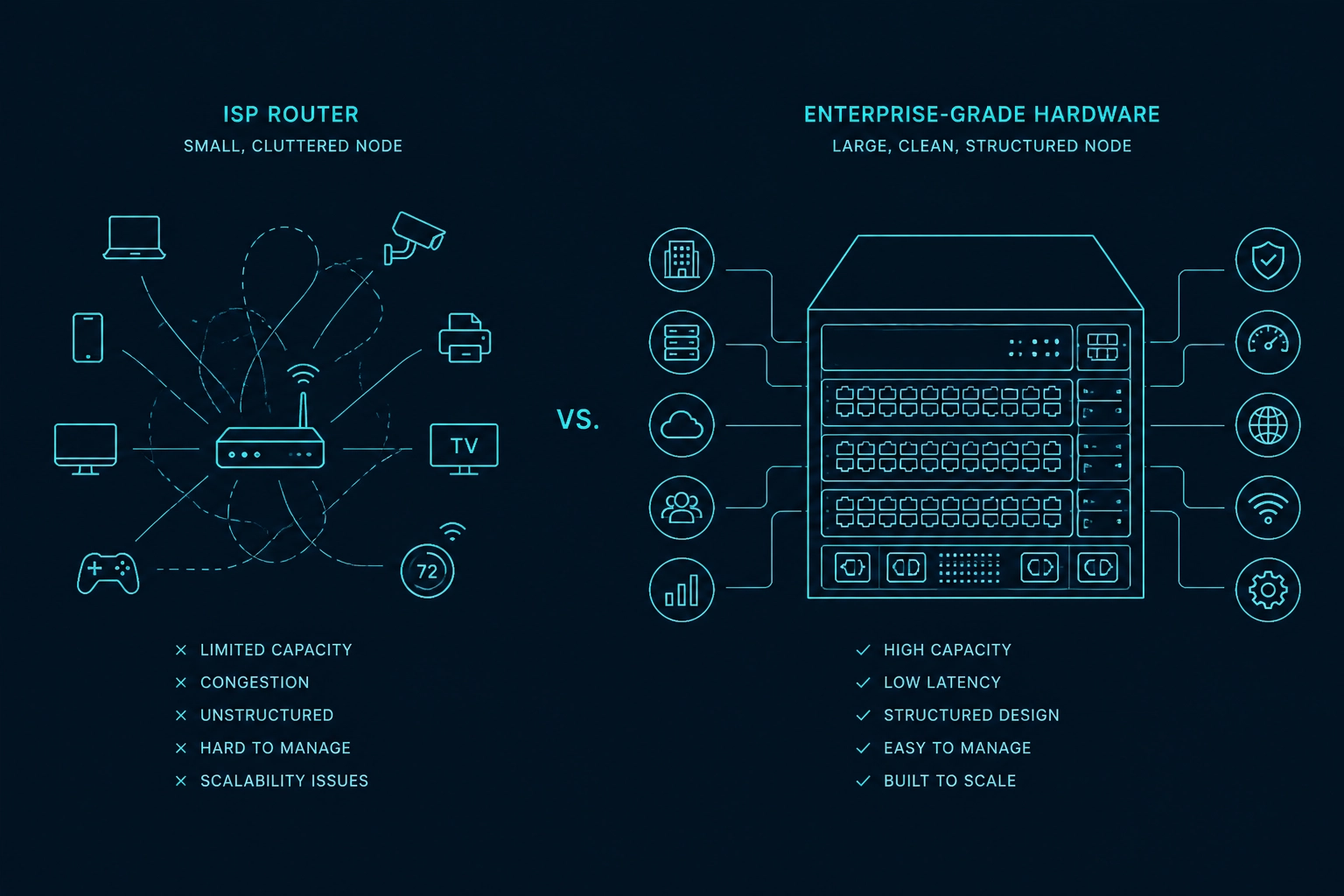
Your ISP’s main goal is to keep costs low. That "free" router they sent you? It’s designed to be "good enough" for a small flat, not a five-bedroom house in Beaconsfield with thick brick walls and twenty connected devices.
These consumer-grade hubs are often underpowered. They struggle to manage the complex task of routing traffic to your phones, TVs, and smart speakers all at once. When they get overwhelmed, they don't just slow down; they often require that "ten-minute reboot ritual" we all know and hate. Their processors simply aren't beefy enough to handle the sheer volume of data a modern household demands.
The Fix: We replace or bypass these hubs with enterprise-grade hardware. We only use professional networking equipment that we’ve personally stress-tested. It’s built to handle high-demand environments without breaking a sweat, ensuring your "Gigabit" actually reaches your devices.
2. Physics Always Wins (The Wall Problem)
Wi-Fi signals are essentially radio waves, and radio waves hate physical obstacles. If you live in an older property with solid internal brick walls, or a modern extension with steel-studded walls and foil-backed insulation, your Wi-Fi signal is essentially hitting a brick wall, literally.
We see this constantly in the local area. A homeowner gets a high-end extension with bi-fold doors and suddenly the signal in the garden or the new kitchen office is non-existent. This is called attenuation. The higher the frequency (like the 5GHz or 6GHz bands used for fast speeds), the worse they are at penetrating solid objects. Even that "Gigabit" signal can't magically teleport through a steel beam.
The Fix: We don't just "hope" the signal reaches. We conduct a physical survey and plan for hard-wired Access Points (APs). By running discreet, high-quality cabling to key areas of the home, we deliver the signal directly to where you need it, bypassing the walls entirely. It's the difference between trying to shout through a door and having a speaker in every room.
3. The "Wireless Mesh" Marketing Trap
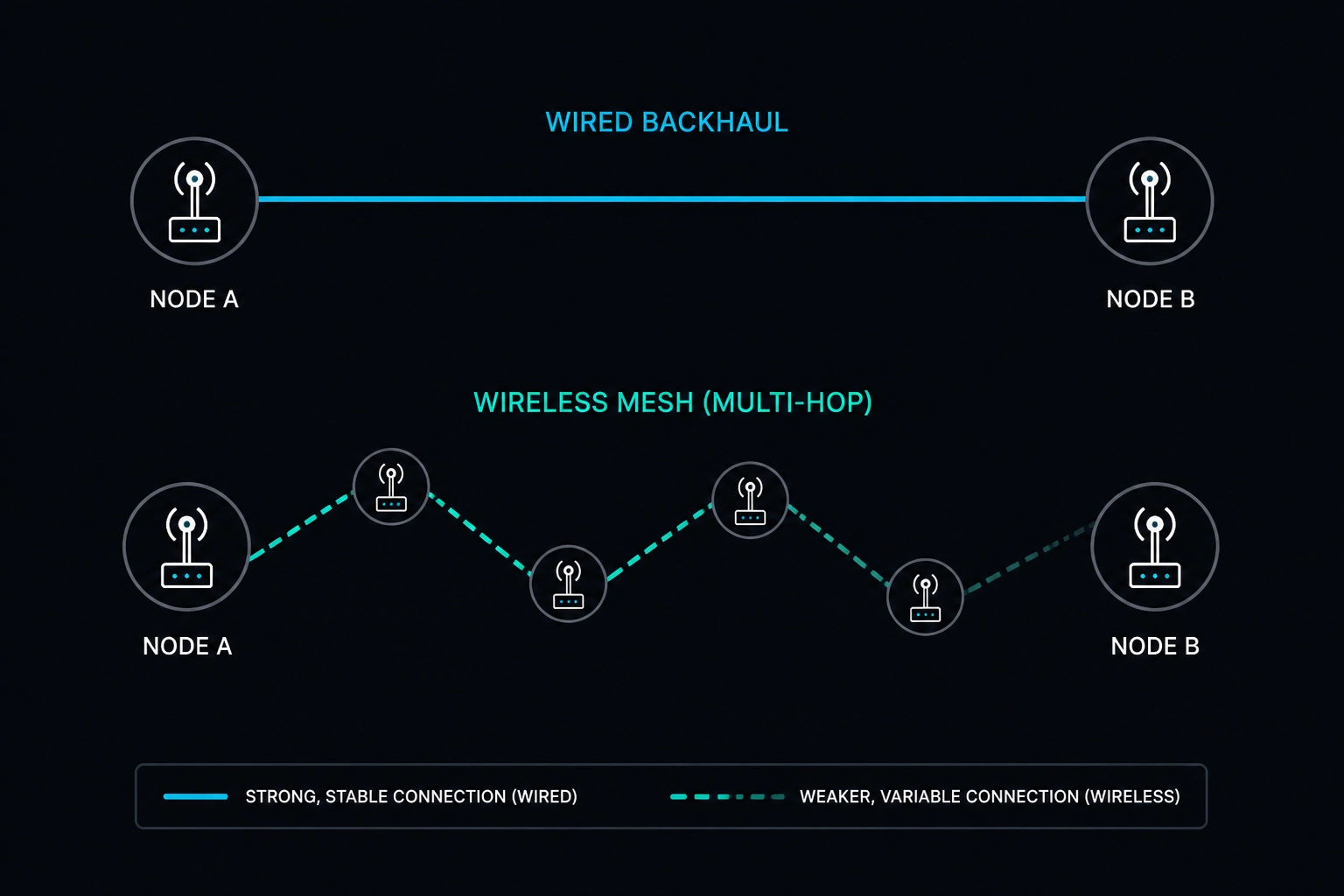
You’ve probably seen those sleek little white boxes in the electronics shop that promise "whole-home coverage." While mesh systems are better than a single router, most consumer mesh systems rely on wireless backhauling.
Think of it like a game of Chinese Whispers. If the first "node" receives a weak signal from the main router because of distance or walls, it can only repeat that weak, garbled signal to the next one. You might have "full bars" on your phone, but the actual speed is a fraction of what you’re paying for. You’re just getting a strong connection to a slow source. This is why your "full bars" in the bedroom still take forever to load a simple webpage.
The Fix: We use Wired Backhauling. This means every single Wi-Fi broadcast point in your house is physically connected back to the main switch via high-speed Ethernet cables. No signal degradation, no "whispers," just pure Gigabit speed in every room.
4. Congestion: Your Neighbors are Stealing Your Airtime
In densely populated areas of High Wycombe or Slough, your Wi-Fi isn't just competing with your own devices: it's fighting your neighbors' routers, baby monitors, and Bluetooth speakers.
Most consumer routers are set to "Auto" channel selection, which is notoriously bad at its job. They often end up bunched together on the same frequency, causing interference that makes your connection stutter, especially during peak evening hours when everyone is streaming 4K Netflix. It’s like trying to have a conversation in a crowded pub; everyone is shouting, so nobody can be heard clearly.
The Fix: As part of our professional setup, we perform a spectrum analysis to identify the cleanest frequencies for your specific environment. We configure your network to avoid the "noise," ensuring your data has a clear lane to travel on. This is a standard part of our business networking services that we apply to every residential project.
5. The Lack of a "Plan B" (No Support)
The biggest frustration isn't just when tech fails: it's that you’re the one who has to fix it. Most homeowners are managing five different "IT guys" or trying to troubleshoot via Google on their mobile data because the home Wi-Fi is down.
When your smart home automation or security system relies on a flaky network, a single glitch can bring the whole house to a standstill. Dropping a connection mid-Zoom call isn't just an inconvenience; it's a professional liability. If your network doesn't have an expert watching its back, you're always one reboot away from a headache.
The Fix: This is where our "one-stop-shop" approach matters. We don't just install and walk away. Our Care Plans mean we are your single point of contact. If there’s an issue, we usually know about it before you do. We apply a Royal Marines-trained discipline to our support: meaning we show up on time, we solve the problem efficiently, and we don't leave until the job is done right.
The Luma Tech Difference: Engineering Over "Gadgets"
The reason your Wi-Fi still feels slow isn't usually your ISP: it's the lack of professional engineering in the home. You wouldn't expect a DIY plumbing job to handle a luxury five-bathroom house, so why expect a "plug-and-play" box to handle your entire digital life?
At Luma Tech Solutions, we treat your home network like an enterprise environment. We use hardware we trust, we plan for the specific architecture of your Berkshire or Bucks home, and we ensure that the technology becomes invisible.
The best technology is the kind you forget exists. It’s the Wi-Fi that just works when you walk into the garden office, the security system that never misses a beat, and the peace of mind that comes with having one expert number to call for IT support for small business and residential needs.
Tired of the "ten-minute reboot"? Whether you need a robust network for your home office or a high-end residential setup that actually delivers the speeds you pay for, we can help. Stop managing the tech and start using it.
Contact us today for a consultation.
Why Choose Luma Tech Solutions?
- One-Stop-Shop: We handle the networking, the security, and the software. No more juggling vendors.
- Local Experts: We know the housing stock in Berkshire and Buckinghamshire and the unique challenges they present, from flint walls to steel-frame modern builds.
- Disciplined Execution: Our background in the Royal Marines means we bring a level of precision, punctuality, and reliability you won't find elsewhere.
- No Cloud Dependency: We prefer local storage for security systems, keeping your data private and your system fast even if the internet goes down.
Don't let your "Gigabit" connection go to waste. Let's build a foundation that actually works.