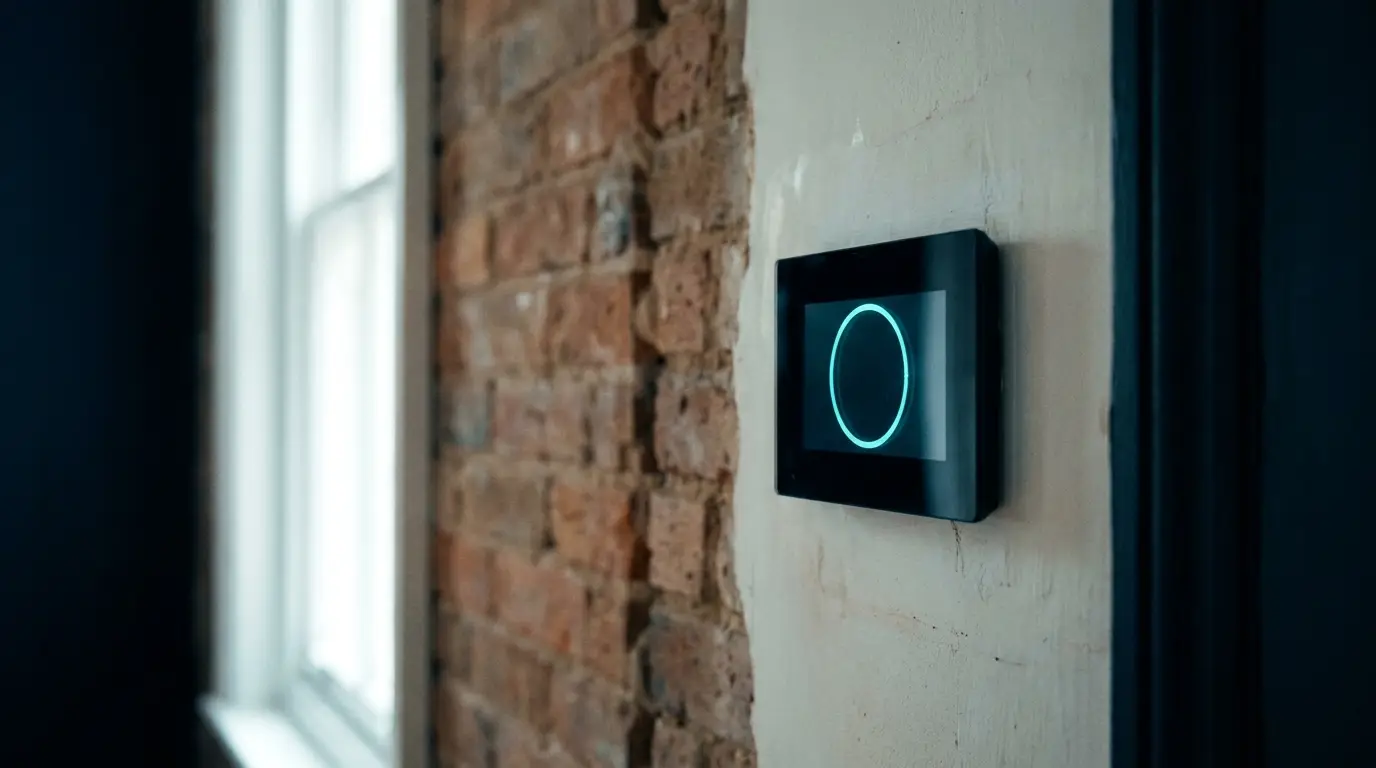
If you live in an older house — solid brick walls, high ceilings, maybe a draughty sash window or two — you've probably wondered whether smart heating controls would actually cut your bills or just add another app to your phone. It's a fair question, because most of the savings figures in the adverts are based on modern, well-insulated homes. Older properties play by different rules.
Why older homes are different
A lot of the housing stock around here — the Victorian terraces in Marlow, the older brick cottages out towards the Chilterns — was built long before anyone thought about insulation. Solid walls take ages to warm up and shed heat quickly once the boiler stops. That changes the maths on a learning thermostat: the "clever" schedules that work brilliantly in a 2010s build can leave an older house cold at 7am, or burning gas for an hour longer than it needs to.
The other common issue is that older homes usually run on a single heating zone. One thermostat in the hallway decides the temperature for the whole house, so the spare room you never use gets exactly the same heat as the kitchen you live in.
What smart heating controls do well
Where smart controls earn their keep is stopping you heating an empty house. Geofencing (turning the heating down when the last person leaves), proper schedules you'll actually adjust because they're on your phone, and hot water control are the features that genuinely save money. In an older, leakier house those savings are often bigger than in a new build — because every wasted hour of heating costs you more.
If your boiler supports OpenTherm, a compatible thermostat can also modulate the flame rather than just switching it on and off, which suits the long, gentle heat-up an older property needs.
Where the real savings are: room-by-room control
For larger period homes, smart radiator valves (TRVs) are usually the bigger win. They let you heat the rooms you use and leave the rest ticking over at 15°C. In a four-bed with two rooms you rarely use, that's a meaningful chunk off the gas bill — typically more than the thermostat alone will ever save you.
What I'd actually recommend
Here's the honest version. If you're in a small or mid-sized home with one zone and a fairly regular routine, a basic smart thermostat is fine — and if your wiring is straightforward, a DIY install is perfectly realistic. You don't need the premium ecosystem, and I'd rather tell you that than sell you one.
I'd also say: spend on draught-proofing before gadgets. £100 of sealant, brush strips and a chimney balloon will do more for an older house than any thermostat. Smart controls make a well-sealed home cheaper to run; they can't fix heat pouring out of the building.
Before you buy anything, run through this:
- Check boiler compatibility — OpenTherm support is worth having; some older combis only take simple on/off control.
- Count your zones — one zone and a regular routine favours a simple thermostat; lots of rooms with different uses favours smart TRVs.
- Test your Wi-Fi where the kit will live — thermostats and TRV hubs in hallways and airing cupboards fail in odd ways when the signal is marginal, which is common in thick-walled brick homes.
- Draught-proof first — it's the cheapest heating upgrade you'll ever make.
Where it is worth calling someone in: multi-zone setups, wiring that predates you, or a system where the thermostat, TRVs and hot water all need to work together properly. That's the point where a botched install costs more than the professional one would have.
The short answer
Smart heating controls are worth it in an older home — arguably more than in a new one — but only if you match the kit to the house. A simple thermostat for simple homes, radiator-level control for bigger ones, and the boring draught-proofing before either.
If you need help with smart heating controls in Berkshire or Buckinghamshire, get in touch — I'm always happy to look at what you've got and tell you what's actually worth doing.